
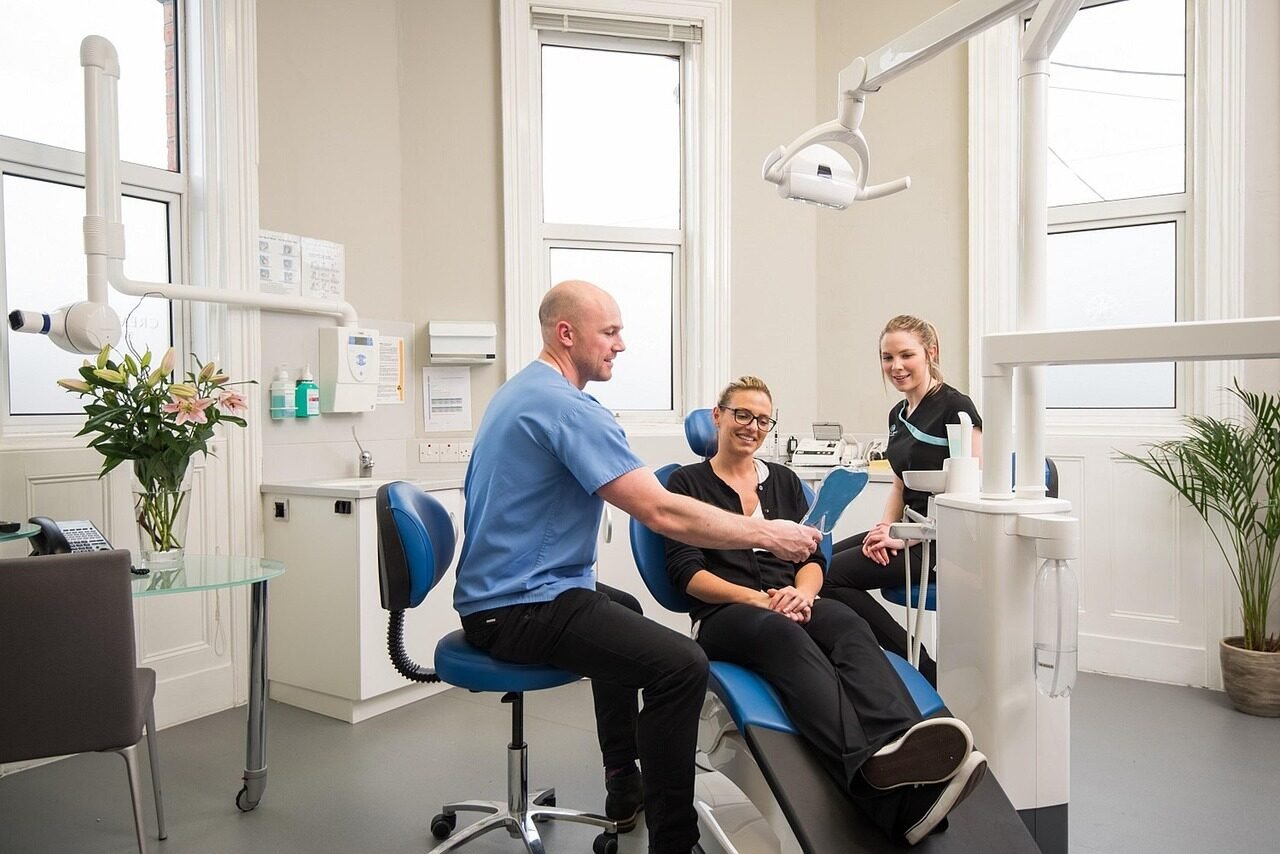
Dental care is the single most common reason Americans travel abroad for treatment, and Mexico is one of the top destinations, according to the CDC Yellow Book. The pull is obvious: most online guides promise 60–75% savings on All-on-4 in Mexico. The problem is that those numbers usually compare a Mexico package price against an inflated US figure, and they leave out the fact that All-on-4 takes two trips.
This guide does the math the honest way: real US benchmarks, both trips included, one arch versus two. Then it shows you exactly where Mexico wins big, and where it barely breaks even.
Key takeaways
- Published all-inclusive All-on-4 packages in Mexico mostly fall between $7,000 and $12,500 per arch.
- The US national average is about $15,176 per arch (range $11,640–$27,500), per CareCredit — far below the $25,000–$45,000 many Mexico marketing pages quote.
- Two trips add a fixed travel cost (our illustrative estimate: ~$4,000 for a patient plus companion). That cost is the same whether you do one arch or two.
- Result: one arch against an average US quote saves roughly 9%. Two arches against a high US quote saves roughly 57%. Your local quote decides everything.
The short answer: what you actually save
Here are four scenarios using the same assumptions: a mid-range Mexico package of $9,750 per arch (the midpoint of published packages) plus about $4,000 in travel for two trips.
| Scenario | US quote | Mexico all-in (incl. both trips) | You save | Savings % |
|---|---|---|---|---|
| 1 arch, average US quote ($15,176/arch) | $15,176 | $13,750 | $1,426 | 9% |
| 1 arch, high US quote ($27,500/arch) | $27,500 | $13,750 | $13,750 | 50% |
| 2 arches, average US quote | $30,352 | $23,500 | $6,852 | 23% |
| 2 arches, high US quote | $55,000 | $23,500 | $31,500 | 57% |
US figures: CareCredit national average and top of range, 2026. Mexico figure: midpoint of published all-inclusive packages reviewed in 2026. Travel: illustrative assumptions shown in the worksheet below. Acrylic-hybrid prosthesis; zirconia costs more in both countries. Not a quote.
Why “save 70%” headlines mislead you
Many clinic and facilitator pages benchmark US All-on-4 at $25,000 to $45,000 per arch. Those prices exist, mostly for zirconia prostheses in expensive metro markets. But CareCredit, which finances dental treatment nationwide, puts the national average at $15,176 per arch, with most quotes between $11,640 and $27,500.
Compare a $9,750 Mexico package to a $40,000 US figure and you get a dramatic 75%. Compare it to the average US quote, add two trips, and the single-arch saving shrinks to around 9%. Both numbers can be “true.” Only one is useful to you, and it depends on your local quote.
That is why the first step is not booking a flight. It is getting an itemized, written All-on-4 quote from a dentist near you.
The two-trip reality (and why arch count changes the math)
All-on-4 is not a one-visit procedure. Typical published timelines for Mexico look like this:
- Trip 1 (about a week): scans, extractions if needed, implant placement, and a temporary fixed bridge, often the same or next day.
- Healing at home (roughly 3–6 months): the implants fuse with your jawbone while you wear the temporary teeth.
- Trip 2 (about 3–7 days): fitting of your final, permanent prosthesis.
Here is the part most cost pages skip: travel cost is fixed per trip, not per arch. Doing both arches costs roughly the same in flights and hotels as doing one. That is why the savings percentage jumps when you treat a full mouth. If you need extensive bone grafting, some clinics add a third trip. Ask before you book.
Run your own numbers in 2 minutes
Use this formula with your real quotes:
Savings = (US quote per arch × arches) − (Mexico quote per arch × arches + travel for both trips)
| Travel line item (illustrative) | Assumption | Estimate |
|---|---|---|
| Flights | $450 round trip × 2 people × 2 trips | $1,800 |
| Hotel (if not in package) | 10 nights × $120 | $1,200 |
| Meals & local transport | 10 days × $100 for two people | $1,000 |
| Total travel | $4,000 |
These are assumptions, not data. Many all-inclusive packages already include hotel and transfers; if yours does, subtract those lines. Not included: lost income from time off work.
Your break-even point: with these assumptions, Mexico only saves money if your US quote is above about $13,750 per arch for one arch, or about $11,750 per arch for two arches. Below that, stay home.
What an honest “all-inclusive” quote must include
Low headline prices often exclude items that are required, not optional. Before comparing any quote, US or Mexico, make sure it states in writing:
- 3D CBCT scan and treatment planning
- Extractions and any bone grafting
- Four implants, abutments, and the implant brand
- The temporary bridge and the final prosthesis, with material (acrylic hybrid vs. zirconia)
- Sedation or anesthesia
- Follow-up visits, warranty terms, and what happens if an implant fails
- Per arch or both arches (this single detail can double a quote)
Will insurance close the gap at home?
Usually not. According to ADA News, citing the National Association of Dental Plans, 32.8% of in-network dental plans cap annual benefits between $1,000 and $1,500. The American Dental Association itself adopted a policy in 2024 opposing annual maximums. A $1,500 cap barely moves a five-figure All-on-4 bill, whether you are treated in Denver or in Tijuana. If your plan reimburses out-of-network care, request a written pre-determination before you travel.
Two tax angles are worth checking with a tax professional:
- HSA/FSA: dental treatment is a qualified medical expense, so pre-tax funds can reduce your effective cost.
- Itemized deduction: IRS Publication 502 allows transportation costs for a trip primarily for and essential to medical care. The lodging allowance (up to $50 per person per night) applies only when care is provided by a doctor in a licensed hospital or an equivalent facility, so a standalone dental clinic may not qualify. Meals are not deductible, and only expenses above 7.5% of your adjusted gross income count.
Is the result as durable as US work?
All-on-4 as a technique has strong long-term data. The largest long-term study we found followed 471 patients with lower-jaw All-on-4 restorations for 10 to 18 years and reported 98.8% cumulative prosthesis survival and 93% implant survival (Maló et al., 2019).
Two honest caveats. First, that study came from the clinic that developed the concept, not from Mexican clinics; we have not found a verified long-term dataset specific to Mexico. Outcomes depend on the surgeon, not the country. Second, the same study reported mechanical complications (chipped or fractured teeth, loose screws) in 36.7% of patients over follow-up, and smoking was associated with greater bone loss around implants. Translation: plan for maintenance. Before you book, know who at home will repair your prosthesis, and insist on a widely used implant brand so a US dentist can source parts.
How to verify a Mexican dentist in 10 minutes
The CDC notes that dentists abroad may not be subject to the same licensure oversight as US dentists. Do these checks yourself, not through links a clinic sends you:
- License: ask for the dentist’s cédula profesional number and look it up in Mexico’s public Registro Nacional de Profesionistas. Confirm the name, profession, and university match the person who will operate on you.
- Specialty: a general license is not a specialty. For implant surgery, ask for the specialty cédula or board certification.
- Facility: if a clinic claims an accreditation, confirm it on the accrediting body’s own directory. Treat unverifiable claims as absent.
- Written plan: procedures, implant brand and model, prosthesis material, number of trips, total price per arch, and warranty. All before you buy a plane ticket.
Where to go next
Mexico is not the only option. Compare destinations on our Mexico, Costa Rica, and Colombia guides, and see every dental procedure we cover, with typical all-in ranges, on our dental treatment abroad page.
Know your number before you book anything.
Enter your procedure, arch count, and destination to see an all-in estimate next to the US benchmark.
Disclaimer: This article is general information, not medical, financial, or tax advice. Prices are published ranges and illustrative estimates, not quotes. Consult a licensed dentist about your candidacy and a tax professional about deductions.
Sources
- CDC Yellow Book, “Medical Tourism.” cdc.gov
- CareCredit, “All-on-4 Dental Implant Cost and Procedure Guide,” 2026. carecredit.com
- ADA News, “Dear ADA: Annual maximums,” citing National Association of Dental Plans data. adanews.ada.org
- Maló P, et al. “The All-on-4 treatment concept for the rehabilitation of the completely edentulous mandible: A longitudinal study with 10 to 18 years of follow-up.” Clin Implant Dent Relat Res. 2019;21(4):565–577. PubMed
- IRS Publication 502, “Medical and Dental Expenses.” irs.gov
- Secretaría de Educación Pública, Registro Nacional de Profesionistas. cedulaprofesional.sep.gob.mx
- Mexico package range: Global Med Authority review of published all-inclusive clinic and facilitator pricing, 2026.