

Liposuction

Conceptual image of a mannequin depicting plastic surgery with marker lines.

Procedures · Body contouring · 2026 planning guide Liposuction Abroad: What It Really Costs by Country (2026) — and How to Do It Safely Liposuction is the most-performed cosmetic surgical procedure in the world, and travelling for it can genuinely cut the price of a mid-volume case from around $8,500 in the United States to roughly $4,000 in the strongest overseas hubs. But it is also the cosmetic procedure where cutting the wrong corner is most dangerous. This page gives you the honest numbers — procedure cost, full-trip cost, and the safety data most clinic sites leave out — so you can decide whether liposuction abroad is right for you, and where. Get a costed quote → Liposuction clinics worldwide Browse clinics in our network that offer liposuction, regardless of country. Select a clinic to review its services and request more information. What liposuction abroad actually costs in 2026 First, the number everyone quotes wrong. The American Society of Plastic Surgeons lists an average liposuction surgeon’s fee of $4,711 — and says plainly that this figure excludes anaesthesia, the operating facility, and other costs. Patients do not pay the surgeon’s fee alone. Once anaesthesia and facility fees are added, a real US case runs $6,000–$12,000, and RealSelf’s patient-reported average total sits near $8,400–$9,000. So the honest US benchmark for a mid-volume case — about three areas, or a circumferential "lipo 360" of the abdomen, flanks and back — is roughly $8,500, not $4,711. We use $8,500 throughout this page and in our calculator, because comparing an overseas all-in package to the US surgeon-only fee would inflate the savings. Here is the typical all-in package price for that same mid-volume case across our destination network. These are 2026 private-pay midpoints, not quotes — your price depends on your anatomy, the number of areas, the technique, and your surgeon. Nine-market comparison Mid-volume liposuction: typical all-in price by country (2026) USD midpoints for a three-area or “lipo 360” case. Procedure package only; travel is not included. The chart data is available in the accompanying table.Malaysia is shown before its 6% foreign-patient service tax. Germany is excluded because it is not a cost destination. Typical all-in mid-volume liposuction price, USD Destination Price United States $8,500 India $2,800 Mexico $4,000 Colombia $4,000 Turkey $4,200 Costa Rica $4,800 Thailand $4,800 Malaysia, pre-tax $4,800 South Korea $7,500 The interactive chart could not be loaded. The same figures are available in the table. For reference, the ranges behind those midpoints: India $2,000–$4,200 · Mexico $3,000–$5,750 · Colombia $2,500–$6,000 · Turkey $3,000–$5,500 · Costa Rica $4,400–$7,500 · Thailand $4,000–$6,000 · Malaysia $3,500–$6,800 (before Malaysia’s 6% foreign-patient service tax) · South Korea $6,000–$11,000. Germany is not shown: German prices meet or exceed US prices for cosmetic work, so it is not a cost destination — we cover it below for a different reason. Compare like with like. A "$1,500 liposuction" quote is almost always a single small area, not a lipo 360. Before you compare any two prices, confirm exactly which areas are included, the technique, and whether anaesthesia and the facility are in the number. Our cost calculator does this on a consistent mid-volume basis and shows the full-trip total for your home country. The savings are real — but here’s the honest math A lower sticker price is not your real saving. Once you add return flights, roughly ten nights of accommodation, and everyday costs while you recover before it is safe to fly, the gap narrows — and for some destinations it disappears. This chart shows the mid-volume case for a patient travelling from the United States, procedure-only versus the full-trip total, against the $8,500 US benchmark. The full-trip reality check Procedure price vs full trip for a U.S. patient The full trip adds return flights, about ten nights’ accommodation and daily costs for one traveller. The chart data is available in the accompanying table.The dashed line marks the $8,500 U.S. benchmark. Anything above it costs more than staying home. Procedure-only and full-trip cost from the United States Destination Procedure Full trip Net saving Mexico $4,000 $5,850 about 31% Colombia $4,000 $5,900 about 31% Turkey $4,200 $6,500 about 24% Thailand $4,800 $7,400 about 13% South Korea $7,500 $10,600 negative 25% The interactive chart could not be loaded. The same figures are available in the table. Read that honestly. For a US patient, the closest hubs — Mexico and Colombia — net around 30–40% after travel. Turkey lands near 24%, Thailand around 13% once the long-haul flight is counted, and South Korea comes out negative: the full trip can cost more than staying home. That is not a mistake in the data. Korea is a quality and aesthetic choice, not a cost one, and we would rather tell you that than pad a savings figure. Your flight math depends on where you live. The chart above is for US patients. Australians and New Zealanders see the opposite pattern — Thailand and Malaysia are short, cheap, often nonstop flights, while Mexico and Colombia are the long, expensive haul. Set your home country in the calculator to see your own numbers. Two costs the headline comparison always leaves out, and we won’t: an in-person or video consultation is required before any reputable surgeon will schedule you, and complications or a revision — if they happen — are on you, often back home. Budget for travel insurance that covers medical complications abroad, and read our guide before you book. The one rule that matters most: don’t combine lipo with a Brazilian Butt Lift Safety — read this before you compare prices Liposuction has a reputation as a "lunchtime" procedure. The data says otherwise, and the data is also reassuring — once you understand what actually drives the risk. The single most important factor is not the country. It is whether the operation is done in an accredited facility and whether it is combined with other procedures. The most-cited scary number — one death in 5,000 — comes from a survey … Read more
Butt Enhancement

Conceptual image of a mannequin depicting plastic surgery with marker lines.

BODY CONTOURING · HONEST GUIDE · 2026 planning guide Butt Enhancement Abroad: BBL, Implants and Non-Surgical Options, Without the Sales Pitch Buttock enhancement is one of the fastest-growing cosmetic categories in the world — and the one where the gap between the marketing and the medical reality is widest. Most people searching for a "cheap BBL abroad" are researching the single most dangerous cosmetic operation there is, often at exactly the kind of clinic where the deaths have happened. We are a buyer-side information service, not a clinic. So this guide does something most pages on this topic won’t: it tells you which option actually fits you, where the real risk sits, and when the honest answer is "don’t get on the plane for this." Non-surgicalLowest risk · subtleImplantsNo fat embolism · higher revisionFat transferMost dramatic · strict vetting Talk to us about candidacy → The 60-second version. There are three ways to make the buttocks fuller: fat transfer (the "Brazilian Butt Lift" / BBL), silicone implants, and non-surgical injectable "collagen-stimulator" treatments (Sculptra and similar). The BBL gives the most dramatic, natural-feeling result — and carries a genuine, if now much-reduced, risk of death from fat entering the bloodstream. Implants avoid that specific risk but have a far higher rate of infection, revision and other local complications. Non-surgical injectables are the lowest-risk by a wide margin, but the result is subtle and temporary. There is no version of this that is both dramatic and risk-free. Anyone who tells you otherwise is selling. Butt enhancement clinics worldwide Browse clinics in our network that offer butt enhancement, regardless of country. Use the clinic profile as a starting point, then verify the named surgeon, exact procedure, facility and aftercare plan before making a decision. The three ways to enhance your buttocks "Butt enhancement," "butt lift" and "BBL" get used interchangeably online, which causes real confusion — and sometimes real harm, because people book one thing thinking it’s another. Here is the actual menu. 1. Brazilian Butt Lift (BBL) — fat transfer A BBL is two operations in one: liposuction removes fat from the abdomen, flanks, back or thighs, that fat is purified, and it is re-injected into the buttocks to add volume and shape. Because it uses your own tissue, the result feels natural and doubles as body contouring of the waist. It is by far the most popular buttock procedure — roughly 96% of buttock augmentations in the US are fat-transfer BBLs rather than implants (industry figures). It is also the one this guide spends the most time on, because it is the one that can kill you if done badly. 2. Buttock implants — gluteal augmentation Solid silicone implants are surgically placed within or above the gluteal muscle to add permanent projection. Implants are the option for lean patients who don’t have enough donor fat for a BBL. They carry no fat-embolism risk — but the location (close to the anus, in a high-movement area) drives a much higher rate of infection, wound problems, malposition and revision surgery than a BBL. Many plastic surgeons have moved away from implants for exactly this reason (peer-reviewed literature; see Sources). 3. Non-surgical “BBL” — Sculptra and injectable fillers A "non-surgical BBL," "Sculptra BBL" or "liquid BBL" is not surgery and not really a lift. It uses injectable poly-L-lactic acid (Sculptra) or hyaluronic-acid fillers to stimulate collagen and add modest volume, with essentially no downtime. It is the safest route — but the change is subtle (best for hip dips and mild shaping, not a dramatic size increase) and temporary, lasting roughly two years before it needs repeating. One critical warning that belongs here: illegal, non-medical "butt shots" of industrial silicone or biopolymers — sold cheaply at "pumping parties" — are a completely different and lethal thing. They cause silicone embolism syndrome and have killed and permanently disabled people. FDA-approved Sculptra injected by a licensed provider is not the same as a black-market silicone injection. Never confuse the two. Three methods, different trade-offs Overall complication rate by method Reported local complications; the BBL figure excludes its separate, rare fatal-embolism risk. The chart data is available in the accompanying table.BBL’s ~9.9% figure covers local complications and excludes its separate, rare risk of death. Implants trade the embolism risk for a much higher local complication and revision rate. Sources: peer-reviewed gluteal-augmentation literature. Estimated local complication rate by method Method Rate Non-surgical (Sculptra or fillers) ~1–2% Fat-transfer BBL ~9.9% local, plus a separate rare fatal-embolism risk Silicone implants ~21.6%; revision ~17.8% The interactive chart could not be loaded. The same figures are available in the table. THE PART THE ADVERTS SKIP Why the BBL is the most dangerous cosmetic surgery — and why that number is misleading in both directions When professional bodies first quantified the risk, the BBL had an estimated mortality of roughly 1 in 3,000 — the highest death rate of any aesthetic surgical procedure (American Society of Plastic Surgeons; ASERF Task Force, 2017, which calculated a range of about 1 in 2,351 to 1 in 6,214). The mechanism is specific and well understood: when fat is injected into or beneath the gluteal muscle, the injecting cannula can tear a large gluteal vein, and fat is forced into the bloodstream. It travels to the lungs (a pulmonary fat embolism) or the brain, and it can be fatal within minutes. Here is the part that matters, and that cheap operators bury: the deaths are almost entirely a technique-and-setting problem, not bad luck. In the largest autopsy series, every single fatal case involved fat that had been injected into the muscle rather than kept in the shallow subcutaneous layer, and around 92% of the deaths happened at high-volume, budget clinics running very short (~90-minute) operations (Pazmiño & Garcia, Aesthetic Surgery Journal, 2023). In response, the major societies issued a practice advisory (ASPS/ASAPS/ISAPS, April 2022) making subcutaneous-only injection with ultrasound guidance the standard of care. Where surgeons follow it, the numbers collapse: surveyed mortality fell from about … Read more

Breast Augmentation

Conceptual image of a mannequin depicting plastic surgery with marker lines.

Breast augmentation guide · 2026 planning estimates Breast Augmentation Abroad: What It Really Costs, and When It’s Worth It A breast augmentation that costs $6,000–$12,000 all-in in the United States is quoted at $3,000–$6,500 across most of the world’s established cosmetic-surgery destinations. That gap is real, and for tens of thousands of patients a year it’s the difference between having the procedure and not. But the sticker price is the easy part. This guide covers what breast augmentation actually costs country by country in 2026, the travel and recovery costs the package price hides, the implant-safety facts a sales page won’t lead with, and — honestly — the situations where flying abroad doesn’t save you enough to justify the trade-offs. See my full trip cost → Request a personalised quote → Before you compare prices Plan around the full decision, not just the package quote. At least 10 days In-country recovery, followed by surgeon clearance before flying Implant surface A safety detail to confirm in writing No fixed lifespan Plan for long-term follow-up and possible future surgery How we price. Every figure below is an all-in surgical package in US dollars: surgeon, anaesthesia, operating room, implants, hospital stay, and (in most destinations) local transfers. It does not include international airfare or your recovery hotel — those depend on where you fly from. Our cost calculator adds real airfare by route and recovery-stay costs to give you a true door-to-door number. Prices are verified against clinic quotes and market data as of 2026 and will drift; treat them as planning ranges, not guarantees. Breast augmentation clinics worldwide Browse clinics in our network that offer breast augmentation, regardless of country. Select a clinic to review its services and request more information. Breast augmentation cost by country (2026) Breast augmentation is the most common cosmetic surgical procedure in the United States — 306,196 were performed in 2024 according to the American Society of Plastic Surgeons (ASPS). The ASPS also reports an average surgeon’s fee of about $4,875 — but that number is misleading, because it excludes anaesthesia, the operating room, the implants themselves, and follow-up. Once those are added, a realistic US all-in total runs $6,000–$12,000, and higher in coastal markets like New York, Miami and Los Angeles. Against that baseline, here’s what an all-in surgical package costs across the destinations we cover. Read these as procedure prices — add your flights and recovery stay to get a trip total. Package price, not trip total All-in breast augmentation package by country Typical 2026 range in USD. Airfare and recovery lodging are not included. The chart data is available in the accompanying table.The U.S. and South Korea overlap; the strongest cost gap sits in Latin America and Turkey. All-in surgical package (USD), typical 2026 range Destination Low High United States $6,000 $12,000 South Korea $5,500 $12,000 Thailand $3,300 $6,500 Mexico $3,500 $6,500 Malaysia $3,200 $6,500 Costa Rica $3,500 $5,500 Turkey $2,800 $5,400 Colombia $2,800 $5,500 The interactive chart could not be loaded. The same figures are available in the table. Destination All-in package (USD) Typical vs. US Notes United States (baseline) $6,000–$12,000 — Surgeon fee only ≈ $4,875 (ASPS); rest is anaesthesia, OR, implants Turkey $2,800–$5,400 50–65% less Highest-volume global cosmetic-surgery destination; direct US flights Colombia $2,800–$5,500 45–60% less Treat quotes under $2,500 as a red flag Mexico $3,500–$6,500 40–60% less Closest to the US; Tijuana lowest, Mexico City highest Costa Rica $3,500–$5,500 40–60% less ~3-hour flights from Miami/Houston; JCI hospitals Malaysia $3,200–$6,500 40–55% less +6% SST applies to foreign patients; Australia/NZ-oriented Thailand $3,300–$6,500 40–55% less Strong for Australia/UK; long-haul from North America South Korea $5,500–$12,000 0–25% less Premium tier — not a cost play. See below The honest read on that table: For a US, Canadian or Australian patient, the real savings cluster in Latin America and Turkey. South Korea is the outlier — its prices overlap the US range, so you’d travel there for surgeon expertise and a specific aesthetic, not to save money. We flag this so you don’t book a long-haul flight expecting a discount that isn’t there. The number that actually matters: your door-to-door trip cost The package price is only part of the decision. A fair comparison puts the destination’s total trip — surgery, round-trip airfare, and at least 10 nights of recovery lodging — next to the US procedure price. Even after adding travel, the value destinations stay well under a US augmentation. Here’s an illustrative breakdown for a US-based patient: The comparison that matters Estimated total trip cost for a U.S. patient Surgery midpoint plus illustrative round-trip airfare and at least 10 nights of recovery lodging. The chart data is available in the accompanying table.Illustrative planning figures only. Route, season and length of stay change the travel component. Estimated total trip cost for a U.S. patient (illustrative, USD) Destination Surgery Travel and recovery Total United States $9,000 $0 $9,000 Colombia $4,000 $1,600 $5,600 Mexico $4,500 $1,300 $5,800 Costa Rica $4,500 $1,500 $6,000 Turkey $4,200 $1,900 $6,100 Thailand $4,800 $2,300 $7,100 South Korea $8,000 $1,500 $9,500 The interactive chart could not be loaded. The same figures are available in the table. Two things this chart is built to show. First, the value destinations (Mexico, Colombia, Costa Rica, Turkey, and even long-haul Thailand) land at a total trip cost roughly $5,600–$7,100 — still $2,000–$3,400 below a mid-range US procedure before the US patient adds a single travel cost of their own. Second, South Korea’s total lands at or above the US — the visual proof that Korea is a quality decision, not a savings decision. Airfare and lodging figures in the chart are illustrative estimates for a US origin. Your real numbers depend on your home airport and travel dates — the cost calculator computes them by route. The break-even test When breast augmentation abroad is not worth it We’d rather lose the booking than send you on a trip that doesn’t add up. Travelling for a breast augmentation is a weak decision when: Your local quote … Read more

Bariatrics

Bariatric surgery guide · 2026 planning estimates Bariatric Surgery Abroad: What Weight-Loss Surgery Actually Costs — and How to Do It Safely A gastric sleeve runs about $16,500 in the United States when you pay cash. A gastric bypass can top $30,000. Most people who want the surgery either can’t get their insurer to approve it, don’t have bariatric coverage at all, or are told to spend six months in a supervised diet program first. That gap — in price, in coverage, in waiting — is why weight-loss surgery is one of the most common reasons people travel abroad for a major operation. Get a free, no-obligation quote → Estimate my costs with the calculator → Why so many people travel for weight-loss surgery We’re not here to talk you into a plane ticket. We’re here to give you the real numbers — verified, not marketing-inflated — show you honestly how surgery stacks up against the new weight-loss injections everyone’s asking about, and be straight about the risks that the discount clinics gloss over. Bariatric surgery abroad can be excellent value and a genuinely life-changing decision. It can also go wrong in specific, documented ways. Both things are true, and you deserve to read both. This isn’t a fringe gamble. Bariatric surgery is one of the biggest drivers of medical tourism in the world, and the flow is overwhelmingly from high-cost countries to lower-cost ones. In one published study of bariatric medical tourists, roughly two-thirds went to Mexico — the vast majority of them Americans and Canadians crossing the border, largely into Tijuana. Turkey plays the same role for patients from the U.K. and Europe. The reasons are structural, not fashion. In the U.S., self-pay bariatric surgery typically runs $17,000–$26,000 depending on the procedure, and even insured patients face high deductibles, coverage exclusions, or a mandatory months-long supervised-diet program before approval. In Canada and the U.K., the surgery is often covered — but the public wait can stretch for years. Faced with that, people look at accredited hospitals abroad performing the same operations — with the same staplers, the same laparoscopic technique, surgeons who often trained in the West — for a third to a half of the price, bookable in weeks. The math starts to explain itself. One important honesty note up front: the savings are real because the overhead is lower abroad — wages, facility costs, no U.S.-style insurance billing markup — not because the surgery is a lesser version of itself at the best clinics. But "the best clinics" is carrying a lot of weight in that sentence, and the safety section below is where we earn your trust on it. First, the numbers. Bariatric clinics worldwide Browse clinics in our network that offer bariatric treatment, regardless of country. Select a clinic to review its services and request more information. The cost gap, procedure by procedure Start with the operation most people research first: the gastric sleeve (sleeve gastrectomy), which is the single most common weight-loss procedure performed worldwide. Here’s what an all-inclusive sleeve package costs in the U.S. versus our four main bariatric destinations. "All-inclusive" abroad means surgeon, anesthesia, hospital stay, and standard aftercare bundled into one price — often with the hotel and airport transfers too. Same operation, four borders A gastric sleeve, all-in: the U.S. vs abroad Typical all-inclusive package price for laparoscopic sleeve gastrectomy. 2026 market estimates in USD. The chart data is available in the accompanying table.Representative midpoint. Lower-cost U.S. cash-pay packages narrow the gap; individual quotes vary. Typical all-in gastric sleeve price, USD Location Price United States $16,500 Thailand $8,500 India $5,200 Mexico $4,800 Turkey $4,500 The interactive chart could not be loaded. The same figures are available in the table. The pattern holds across every procedure, but the dollar gap grows with the size of the operation. A bypass costs more than a sleeve everywhere — more operating time, more complexity — so the absolute saving on a bypass abroad is even larger. This next chart shows the full low-to-high range for each of the main procedures; the log scale lets a $3,500 sleeve and a $40,000 revision share one picture. The full spread Price ranges by procedure: U.S. vs our network abroad Low–high market ranges across Mexico, Turkey, India and Thailand on a logarithmic scale. The chart data is available in the accompanying table.All-in 2026 planning ranges. Revision and high-BMI cases generally sit toward the top. All-in 2026 price ranges, USD Procedure U.S. Abroad Gastric sleeve $10,000–$25,000 $3,500–$12,000 Gastric bypass $20,000–$35,000 $4,500–$13,000 Mini-bypass $16,000–$30,000 $4,500–$10,000 Revision surgery $20,000–$40,000 $5,500–$13,000 The interactive chart could not be loaded. The same figures are available in the table. A reality check on the headline prices. You’ll see clinics advertise gastric sleeves "from $2,500" and "save up to 90%." Read those carefully. A rock-bottom teaser price often excludes things a real quote includes — extra fees for a higher BMI, a hernia repair, longer hospital observation, or the supplements you’ll need afterward. And "up to 90%" compares the cheapest foreign clinic against the most expensive, insurance-inflated U.S. hospital bill. Here’s the honest version: measured against a typical U.S. self-pay price, realistic savings on a sleeve or bypass land around 50–73% at our featured destinations. Measured against a cut-rate U.S. cash-pay package (some centers in Texas, Florida or Oklahoma bundle a sleeve for $10,000–$12,000), the gap narrows further. The saving is still large and real — it just isn’t 90%, and anyone quoting you 90% is selling, not informing. Savings by destination — before the flight Take the gastric sleeve, priced against a typical U.S. self-pay figure of about $16,500, and rank our bariatric destinations by treatment-price savings. This is the sticker-price gap only — but with a five-figure saving on the table, the flight and hotel are a rounding error either way. Before you factor in the flight Estimated savings vs the U.S. — gastric sleeve Treatment-price gap against a typical $16,500 U.S. self-pay sleeve. The chart data is available in the accompanying … Read more

IVF and Fertility

IVF & fertility abroad · 2026 planning guide IVF Abroad: An Honest 2026 Guide to Cost, Success Rates, and Who Can Actually Get Treated If you are researching IVF abroad, almost every page you’ll find leads with one number: the price of a single cycle. We’re going to argue that’s the wrong number — and that leading with it is exactly the kind of half-truth this site exists to correct. Two things decide whether fertility travel is a good idea for you, and neither is the sticker price: your realistic chance of a live birth (which is driven by age and clinic quality, not by country), and whether the destination will legally treat you at all (several won’t, depending on your marital status, sexual orientation, or need for donor eggs). This guide puts those two things first, then gives you honest, sourced costs. 1EligibilityConfirm the destination can treat you2OutcomesCompare live birth, not brochure claims3Total costPrice medications, add-ons and repeats Plan a procedure → Estimate costs → A buyer-side planning guide Written by the Global Med Authority editorial team. What this page does and doesn’t cover. We cover IVF, ICSI, donor eggs and sperm (where legal), egg freezing, and genetic testing (PGT-A). We do not cover or facilitate surrogacy. It carries legal and ethical complexities — including documented cases of legal limbo and exploitation — that we won’t reduce to a marketing page. If surrogacy is your path, work with specialist family-law counsel in both countries, not an information site. IVF and fertility clinics worldwide Browse clinics in the network that offer IVF or fertility treatment. Confirm eligibility, current services, outcome reporting and a fully itemised quote directly with each clinic before paying a deposit. Start here: the number that actually matters The honest metric in IVF isn’t cost per cycle — it’s expected cost per live birth. A cheaper cycle at a clinic with lower success rates can cost more per baby than a pricier cycle at a better one. And the biggest driver of success isn’t the clinic’s brochure; it’s the age of the eggs. Here’s the illustrative age pattern using your own eggs. These are approximate live-birth rates per embryo transfer; cumulative rates across two or three cycles are higher, and individual results vary widely. Live-birth context Approximate live-birth rate per embryo transfer Planning estimates only; individual outcomes and quotes vary. Measure Estimate Under 35 ~45% 35–37 ~35% 38–40 ~25% 41–42 ~12% 43–44 ~5% Over 44 ~2% Donor eggs ~50% The interactive chart could not load. The same data remains available in the table. Like-for-like planning estimate One all-in own-egg IVF cycle Planning estimates only; individual outcomes and quotes vary. Measure Estimate India $4,200 Turkey $4,500 Colombia $5,500 Malaysia $5,830 incl. tax Mexico $6,200 Costa Rica $6,800 South Korea $7,500 Thailand $7,500 United States $20,000 The interactive chart could not load. The same data remains available in the table. The unbundling trap How a base cycle becomes the real total Planning estimates only; individual outcomes and quotes vary. Measure Estimate Base cycle $12,500 Medications $4,000 ICSI $1,500 PGT-A $4,500 Frozen transfer $5,000 Freeze + storage $1,000 The interactive chart could not load. The same data remains available in the table. Cost per live birth One cycle versus an illustrative 2.5-cycle path Planning estimates only; individual outcomes and quotes vary. Measure Estimate United States — one cycle $20,000 United States — ~2.5 cycles $50,000 Low-cost destination — one cycle $4,500 Low-cost destination — ~2.5 cycles $11,250 + travel The interactive chart could not load. The same data remains available in the table. Two things jump out. First, success falls sharply with maternal age when you use your own eggs — from roughly 45% per transfer under 35 to a few percent past 44. Second, donor eggs decouple success from the recipient’s age, because the eggs come from a young donor. That single fact reframes the entire decision for many older patients: the relevant question stops being "where is IVF cheapest?" and becomes "where can I access good donor eggs, legally and affordably?" — and as you’ll see, that rules several popular destinations out. Be sceptical of clinic success rates — especially abroad. The US has a public, clinic-by-clinic reporting system (SART/CDC). Most destination countries do not. A clinic advertising "70% success" may be quoting clinical pregnancy (not live birth), a favourable age group, or donor cycles. Always ask for live-birth rate per embryo transfer, for your age band, using your own eggs, in writing. What IVF actually costs: the US vs the network A realistic all-in US cycle — meaning the base cycle plus medications and ICSI where indicated — runs about $20,000–$23,000 in 2026. The figure clinics advertise (often around $12,000–$13,000) is usually the base cycle only, before medications and add-ons. We use a conservative $20,000 as the US benchmark, and we compare it like-for-like against all-in destination cycles. Before you fly, shop at home. Some large-volume US clinics offer all-in cycles for roughly $8,000–$13,000. If one is near you, it narrows the saving from travelling considerably. We’d rather you know that than not. On a like-for-like own-egg cycle, here’s how the network compares (2026 midpoints, USD). These match our cost estimator exactly. Destination All-in own-egg cycle (USD) Vs US $20,000 India $4,200 ~79% less Turkey $4,500 ~78% less Colombia $5,500 ~73% less Malaysia $5,500 + 6% service tax ~71% less Mexico $6,200 ~69% less Costa Rica $6,800 ~66% less South Korea $7,500 ~63% less Thailand $7,500 ~63% less Those percentages are real for a single cycle — but read the next two sections before you bank them, because (a) the advertised "cycle" almost never includes everything, and (b) most patients need more than one cycle. The unbundling trap An advertised cycle price — at home or abroad — is a starting line, not a finish line. Medications typically add $3,000–$7,000; ICSI adds roughly $1,500; PGT-A genetic testing (biopsy plus analysis) can add $3,000–$5,000; a later frozen embryo transfer adds around $5,000; freezing and storage add more. … Read more

Orthopedics

Orthopedic surgery guide · 2026 planning estimates Orthopedic Surgery Abroad: What Hip & Knee Replacement Really Costs in 2026 — and Who Should (and Shouldn’t) Travel If you are facing a hip or knee replacement and the US price makes you flinch — or you are stuck on a Canadian, British or Australian waiting list — traveling for surgery can genuinely change the maths. But the savings are not the cartoonish "up to 90%" you will read elsewhere, and for some destinations the honest saving is small once you count the flight and the recovery stay. This page gives you the real numbers, the real risks, and a clear map of which country fits which patient. Browse orthopedic clinics → Estimate my costs → The short version A single hip or knee replacement runs about $6,000–$21,000 abroad, versus roughly $35,000 for a typical US uninsured hospital self-pay case. We benchmark against that hospital figure — not the highest US number, and not the cheapest. India, Turkey and Colombia lead on price (single joint from ~$6,000–$9,500). Mexico, Costa Rica, Thailand and Malaysia sit in a comfortable mid-tier. South Korea is premium, not budget. Germany is the one exception to "Europe is expensive": for joints specifically, German self-pay undercuts US hospital pricing and schedules surgery in 3–4 weeks — the fix if you are waiting months at home. Watch the US comparison. If you can access a US ambulatory surgery centre (ASC) or negotiate a cash price (~$20,000–$30,000), your saving abroad shrinks. We will tell you when it does. Prices are for a single (unilateral) joint. Both hips or both knees together is a separate, larger case. Orthopedic clinics worldwide Browse clinics in our network that offer orthopedic treatment, regardless of country. Select a clinic to review its services and request more information. The honest headline: what you can and can’t save Most medical-tourism sites compare their overseas price against the scariest US number they can find. We don’t, because the US "price" for a joint replacement isn’t one number — it’s a range so wide it’s almost meaningless. Federal hospital price-transparency data puts the average US cash price for a hip replacement near $14,400, and for a total knee near $14,200 — roughly 39% below the average hospital list price. A bundled ambulatory surgery centre (ASC) self-pay package typically lands around $20,000–$30,000. Only a full-freight, uninsured hospital self-pay case reaches the $35,000–$45,000 most people picture. We use $35,000 as the US benchmark on this page and in our calculator: a realistic uninsured-hospital self-pay figure, deliberately not the top of the range. That choice matters. It means our savings numbers are lower than competitors who anchor to $50,000 or $60,000 — and it means if you can shop your way into a US ASC bundle, you should factor that in before you book a flight. The calculator lets you see both the procedure-only saving and the full-trip saving once flights and recovery are added. Single-joint price map Typical 2026 hip and knee replacement price by destination All-in procedure packages in USD. The United States bar is a typical uninsured hospital self-pay benchmark. Planning midpoints for one joint. Malaysia is shown before its 6% foreign-patient service tax. Typical single-joint replacement price, USD Destination Hip Knee India $6,500 $6,000 Colombia $9,500 $8,500 Turkey $9,500 $9,000 Malaysia $11,750 $11,000 Mexico $11,500 $12,500 Costa Rica $13,500 $12,000 Thailand $13,500 $11,500 Germany $13,500 $13,500 South Korea $21,000 $17,000 United States $35,000 $35,000 Interactive chart unavailable. The data table remains available. Two rules we hold to across this page: every price is a single-joint, all-in surgical package at an internationally accredited hospital, and every figure is a planning midpoint, not a quote. Your real number depends on your diagnosis, your surgeon, your implant and whether anything goes wrong. What orthopedic procedures do people travel for? The overwhelming majority of orthopedic medical travel is joint replacement — hips and knees — because these are high-cost, high-volume, elective procedures with mature, standardised techniques and the same implant brands (Zimmer Biomet, Stryker, DePuy Synthes, Smith & Nephew) used in Western operating rooms. Those two procedures are the focus of this page, and the only two we price in our calculator, because they are the ones we can source reliably. Patients also travel for spinal fusion, shoulder replacement and rotator cuff repair, and ACL and other sports-injury reconstruction. We cover those briefly further down with indicative ranges — but we deliberately do not put them in the calculator yet, because we haven’t sourced them to package-level confidence. We would rather leave a gap than publish a number we can’t stand behind. Hip & knee replacement cost by destination Here is the value map. Prices are single-joint, all-in packages in USD (2026), matched to our calculator. Think in three tiers plus two special cases. Hip and knee replacement cost by destination Destination Hip (single) Knee (single) Best for India $6,500 $6,000 Lowest price at accredited, high-volume hospitals Colombia $9,500 $8,500 Strong value, closer to North America Turkey $9,500 $9,000 Value + very high surgeon volume, easy from the UK/EU Malaysia* $11,750 $11,000 High-value/complex cases; robotic joint depth Mexico $11,500 $12,500 Closest option for US/Canada; drive-across access Costa Rica $13,500 $12,000 Comfortable recovery, JCI hospitals, near the US Thailand $13,500 $11,500 Robotic (MAKO) programs, strong for Australians Germany $13,500 $13,500 Western-standard care + no waiting list South Korea $21,000 $17,000 Premium surgeons and technology — not a budget choice United States $35,000 $35,000 Uninsured hospital self-pay benchmark *Malaysia adds a 6% foreign-patient service tax at billing; the figures above are pre-tax and the calculator adds the SST for you. The value tier: India, Turkey, Colombia India is the price floor. A single knee at an internationally accredited hospital in Gurgaon or Delhi commonly runs $4,500–$6,500, hip $5,500–$8,000, on the same implants and with surgeons who have performed thousands of joints. For a straightforward hip or knee at the lowest accredited cost, nothing in our network beats it. The trade-off is distance and the … Read more

Hair Transplant

hair, hair care, hair transplant, hair restoration, hair style, hair growth, hair problem, hair care, hair transplant, hair transplant, hair transplant, hair transplant, hair transplant

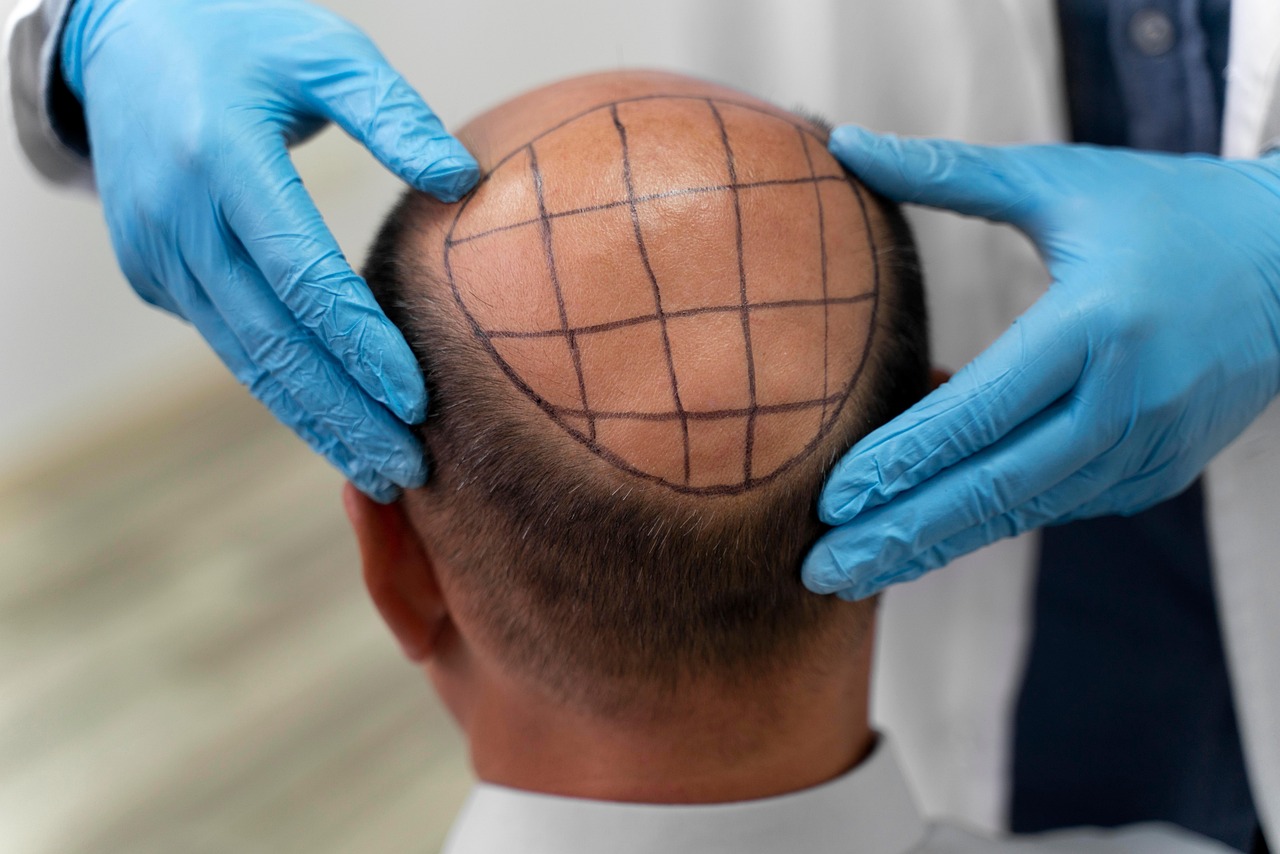
Hair restoration · buyer-side guide · 2026 planning estimates Hair Transplant Abroad: What It Really Costs, Who Should Go, and How Not to Get Burned A hair transplant abroad can cost 60–80% less than the same procedure at home — and the very same low prices are where most of the horror stories come from. Both of those things are true at once, and almost no one publishing on this topic will tell you both, because almost everyone publishing on this topic is selling you a chair in their operating room. We are not a clinic. We coordinate treatment across a network of nine countries, and we would rather route you to the right decision — sometimes including "don’t do this yet," or "you’re not a candidate" — than book you into the wrong one. This page is the honest version. 1Pattern firstConfirm stable loss2Donor secondProtect finite supply3Price lastVet the operating hands See your all-in price → Here is the short version before the detail. If you have a stable, patterned hair loss and a healthy donor area, treatment abroad is one of the best-value elective procedures in the world. If your thinning is diffuse, if you’re in your early twenties and still shedding fast, or if you’re chasing a teenage hairline with a limited donor supply, the cheapest quote you find will be the most expensive mistake you ever make. The difference between those two outcomes is not the country. It’s whether you understood your own case before you booked. Hair transplant clinics worldwide Browse clinics in our network that offer hair transplantation, regardless of country. Confirm the named surgeon, who performs extraction and implantation, and how the clinic protects your donor supply before committing. The three techniques, in plain language Nearly every modern hair transplant uses one of two harvesting methods, occasionally a third. Understanding the difference is the first defense against a clinic upselling you a branded acronym that is really just standard FUE with a marketing name. FUE (Follicular Unit Excision) follicles are extracted one at a time with a micro-punch, leaving no linear scar. It is today’s standard and what most people mean by "a hair transplant." Sapphire FUE, DHI-Pen variations, and most branded "techniques" are refinements of FUE, not different operations. DHI (Direct Hair Implantation) a variation of FUE that uses an implanter pen to create the site and place the graft in one motion, giving the surgeon fine control over angle and depth. It is slower and often priced higher; it is genuinely useful in some cases and pure upsell in others. FUT (Follicular Unit Transplantation) the older "strip" method, removing a band of scalp and dissecting it into grafts. It leaves a linear donor scar but can yield a high graft count in one session. It is declining but still has specific uses, mainly scar revision and very high-volume cases. Our rule of thumb: the technique matters far less than the hands performing it. A skilled surgeon doing standard manual FUE beats a technician running a premium-branded machine every time. When a clinic leads with the name of its "exclusive" method instead of who actually performs your extraction, treat that as a marketing signal, not a medical one. What it actually costs — and why the savings you see quoted are usually wrong Most patients need between 1,500 and 4,000 grafts, with a 3,000-graft session being a fair working baseline for typical male pattern loss. In the United States that runs roughly $6,000 to $15,000 or more for surgery alone, at about $3.50–$6 per graft at credentialed mid-tier practices and $6–$10 at premium ones — and that figure usually excludes the consultation, PRP, medications, and follow-ups, which add $1,500–$3,500 more. Abroad, the same 3,000-graft procedure is commonly published in the ranges below. Six-market comparison Typical hair transplant cost by country ~3,000 grafts, USD. U.S. is surgery-only; destinations are package midpoints. The chart data is available in the accompanying table.U.S. typically adds roughly $1,500–$3,500 for PRP, medications and follow-ups. Destination figures are typical published package midpoints, not quotes. Typical cost for about 3,000 grafts Country Typical cost United States, surgery only $14,500 South Korea $8,500 Mexico $4,500 Thailand $4,200 Turkey $2,800 India $2,200 The interactive chart could not be loaded. The same figures are available in the table. Now the part the discount clinics leave out. That US figure is surgery only, at a clinic you can drive to, with local follow-up if something goes wrong. A Turkey package price typically bundles the hotel, airport transfers, PRP, and medications. So a headline that reads "$14,500 in the US vs $2,800 in Turkey" isn’t comparing the same thing — but it also understates your real saving, because once you normalize what’s actually included, the gap is often larger, not smaller. Here is the honest, like-for-like version, including the flight. Like-for-like comparison The real gap: what you actually pay 3,000-graft FUE including procedure, extras and travel. The chart data is available in the accompanying table.Estimated total: $17,000 at home in the U.S. versus $3,900 for a Turkey package including flights and incidentals — about 77% less. True out-the-door cost for a 3,000-graft FUE Component U.S. at home Turkey all-in Surgery or package $14,500 $2,800 PRP, medication and follow-up $2,500 Included Flights and incidentals $0 $1,100 Total $17,000 $3,900 The interactive chart could not be loaded. The same figures are available in the table. Figures are typical published ranges compiled from multiple 2026 market sources, not quotes. Your only real number comes from a consultation that measures your donor density and confirms your graft count. Seven in ten patients guess their own Norwood stage wrong, so treat any online estimate — including ours — as a planning range, not a price. Before cost: are you even a good candidate? This is the section the clinics bury, because the honest answer costs them sales. A hair transplant does not grow new hair — it redistributes the finite, permanent hair you already have from the back and … Read more

Dentistry

Conceptual image of a mannequin depicting plastic surgery with marker lines.

Dental tourism guide · 2026 planning estimates Dental Tourism: What Dental Work Actually Costs Abroad — and When It’s Worth the Trip A single dental implant runs about $4,500 in the United States. A full-arch All-on-4 can top $25,000 — per arch. Most U.S. dental plans cap out near $1,500 a year and treat implants as elective, so millions of Americans pay cash. That gap is why dental care is now the single most common reason U.S. residents travel abroad for treatment. Get a free, no-obligation quote → Estimate my costs with the calculator → Why so many people leave home for a dentist What this guide will show you: We’re not here to sell you a plane ticket. We’re here to give you verified numbers and to say plainly when travelling saves thousands — and when staying home makes more sense. The sections below compare procedure costs, count the travel costs, and explain how to tell a safe clinic from a risky one. This isn’t a niche gamble any more. Dental care is the most common form of medical tourism among U.S. residents, according to the CDC’s Yellow Book — ahead of cosmetic surgery and every other category. A 2026 report from the CareQuest Institute for Oral Health estimated that roughly 9.6 million U.S. adults — about 1 in 25 — have travelled abroad for dental care at some point, with cost cited as the leading reason. The driver is structural, not fashion. Around 69 million American adults (about 26%) have no dental insurance, and even those who do usually hit an annual maximum around $1,500 — barely one implant. Medicare doesn’t cover implants at all. When a full-mouth rebuild at home is priced like a car, and lower-cost clinics abroad use the same implant brands (Straumann, Nobel Biocare, Osstem) at a fraction of the overhead, the math starts to explain itself. The savings are real and repeatable because they come from lower operating costs — rent, wages, insurance — not from cutting clinical corners at the best clinics. But "the best clinics" is doing a lot of work in that sentence, and we’ll come back to it in the safety section. First, the numbers. Dental clinics worldwide The cost gap, procedure by procedure Here’s what the four procedures people actually travel for cost in the U.S. versus our five main dental destinations. Start with the one most people research first — a single implant, priced all-in (the post, the abutment and the crown together, which is how it should always be quoted). Same procedure, six borders One dental implant, all-in: the U.S. vs abroad Complete single-tooth implant — post, abutment and crown together. Typical 2026 market prices in USD. The chart data is available in the accompanying table.Representative midpoint; quotes vary by implant brand, grafting needs and clinic tier. Typical all-in single-implant price, USD Location Price United States $4,500 Thailand $1,800 Colombia $1,300 Costa Rica $1,200 Mexico $1,200 Turkey $700 The interactive chart could not be loaded. The same figures are available in the table. The pattern holds across the board, but the scale changes everything. A crown or a veneer is cheaper abroad in percentage terms, yet the dollar gap is small. A full arch is where the difference stops being a discount and becomes a different order of magnitude. This next chart shows the full low-to-high range for each procedure — the log scale lets a $150 crown and a $30,000 arch share one picture. The full spread Price ranges by procedure: U.S. vs our network abroad Low–high market ranges across five destinations, shown on a logarithmic scale. The chart data is available in the accompanying table.All-on-4 is per arch; implant, crown and veneer prices are per tooth. All-in price ranges, USD Procedure U.S. Abroad Single implant $3,000–$6,000 $400–$2,600 Porcelain crown $1,000–$2,500 $160–$800 Porcelain veneer $1,000–$2,500 $180–$600 All-on-4, per arch $18,000–$35,000 $3,000–$14,000 The interactive chart could not be loaded. The same figures are available in the table. A reality check on the headline prices. You’ll see clinics advertise "implants from $299" or "full mouth from $3,000." Read those carefully. A sub-$500 implant price is usually the titanium post only — no abutment, no crown, no CT scan. A rock-bottom All-on-4 figure is often the temporary acrylic arch, not the permanent one, and it may exclude the extractions and sedation most cases need. And the "save up to 90%" banners you see on aggregator sites describe a best case against the most expensive U.S. clinic. Our all-in ranges above are what a complete, honest quote looks like — and after travel, realistic savings on major work land at 40–70%, not 90%. Savings by destination — before the flight Take the highest-value case — a full-mouth restoration. Our cost calculator benchmarks that at about $35,000 in the U.S., and these are the calculator’s own destination figures, ranked by treatment-price savings. This is the sticker-price gap only; the flight comes next. Straight from the calculator Estimated savings vs the U.S. — full-mouth dental implants Treatment-price gap against a $35,000 U.S. benchmark, before travel. The chart data is available in the accompanying table.Calculator midpoints; acrylic versus zirconia can move the result. Estimated full-mouth savings Destination Savings Turkey 78% Colombia 76% Mexico 73% Costa Rica 70% Thailand 67% The interactive chart could not be loaded. The same figures are available in the table. Turkey posts the biggest headline saving, which is why it dominates global "cheapest dental" searches. But headline savings and smart savings aren’t the same thing — Turkey is also the longest, most expensive flight from the U.S. and the widest in quality variance. That’s the whole point of the next section. The break-even test: when travelling actually pays This is the chart most dental-tourism sites won’t show you, because it’s the one that sometimes says don’t go. We’ll show it anyway. It takes the U.S. price, subtracts the treatment cost abroad, then subtracts a realistic travel budget — flights, hotel and meals — and shows what’s actually … Read more